
Britta Jaschinski
Britta Jaschinski is a wildlife photojournalist known for her compelling investigations into the relationship between humans and nature. Her distinctive photographic style sheds light on environmental and wildlife crimes, often serving as powerful evidence to urge governments, lawmakers, businesses, and the public to take meaningful action towards a more sustainable future. Working with authorities and environmental organisations, Jaschinski’s work is featured in international publications like National Geographic, Time Magazine, Geo and many more. Outside of her assignments, she is a sought-after speaker at major photography and conservation events. Her images have been exhibited in galleries, festivals and museums worldwide. Born and raised in Germany, currently based in London, United Kingdom.
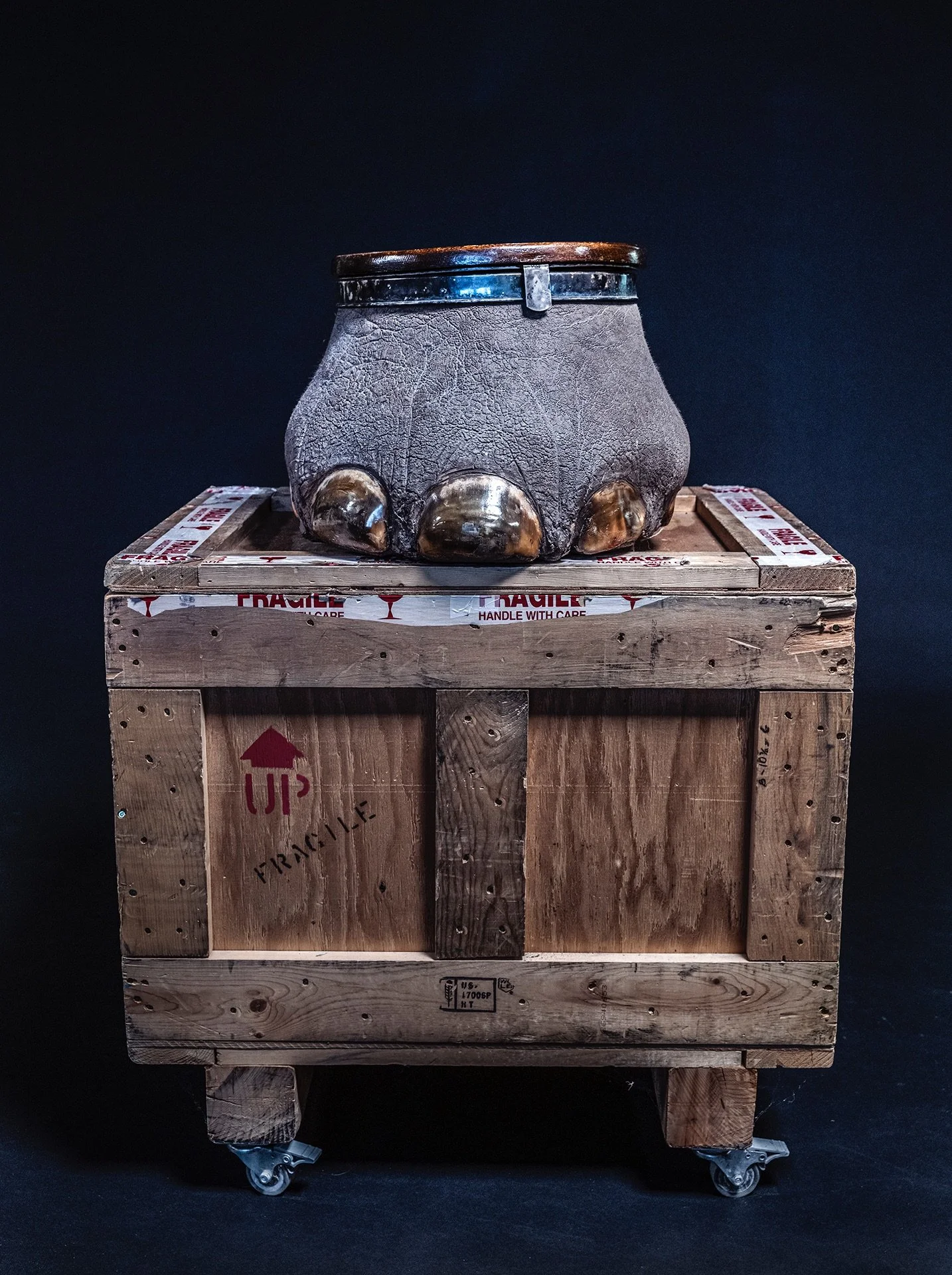
Confiscated Elephant Foot - Mini Bar, 2021, LIB Institute Hamburg, Customs, Germany
Globally, the illegal wildlife trade is estimated to be worth as much as $23 billion a year. Traffickers fashioned this elephant foot into a minibar that could fit bottles, glasses, and ice.
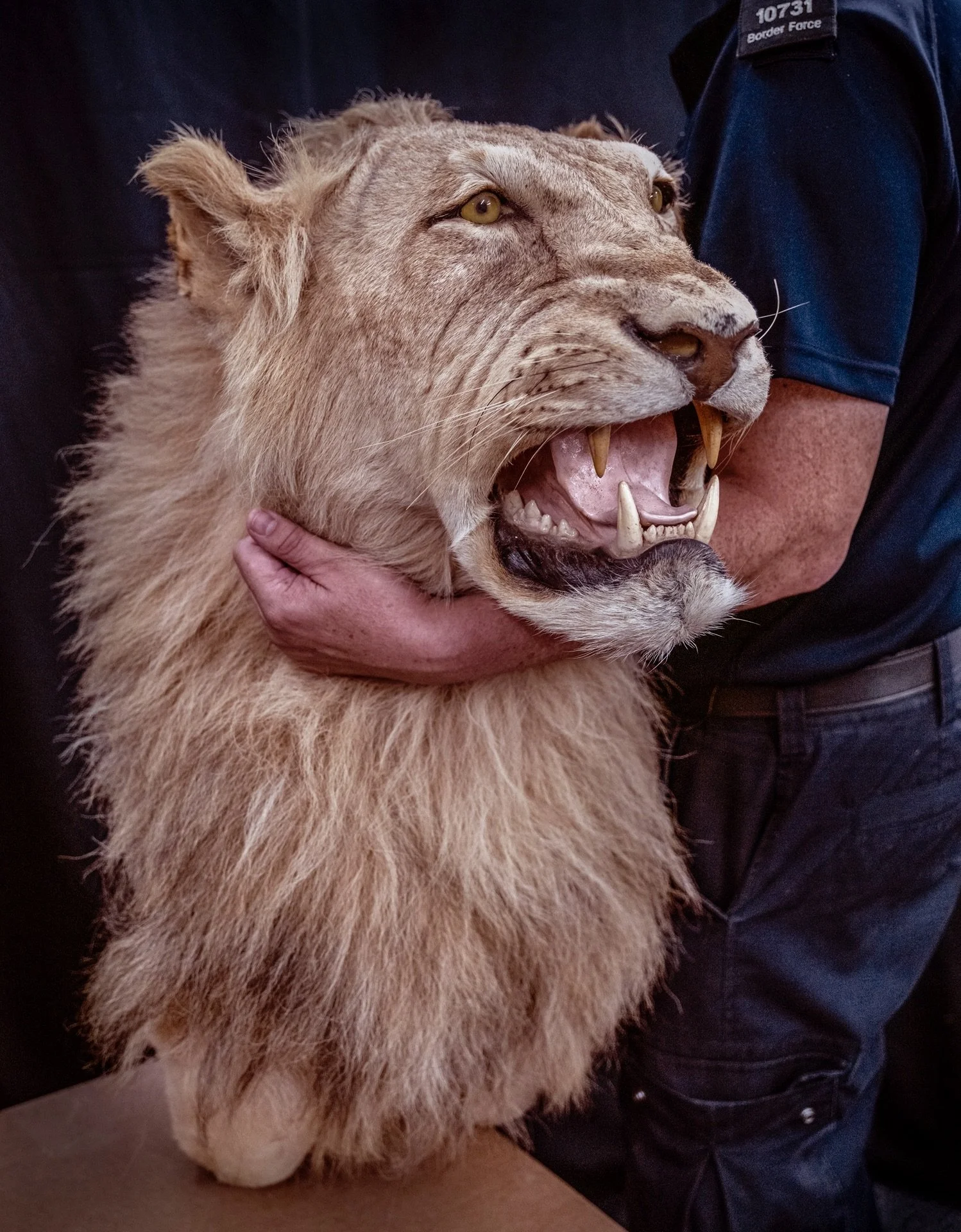
Confiscated Lion Trophy, 2024, CITES Border Force, Heathrow Airport, London, UK
The annual global operation, Operation Thunder, brings together police, customs, border control, and wildlife and forestry officials across 133 countries. In 2024, it saw its highest participation since launching in 2017.Over just three weeks, officers coordinated around 500 arrests and more than 2,000 seizures of animals and plants protected under the Convention on International Trade in Endangered Species (CITES). Any trade in breach of CITES is illegal.Border officers work tirelessly to build intelligence on illegal trade, often supported by forensic experts. Among the 2,114 seizures were over 300kg of ivory, thousands of turtle eggs, 30 tons of plants, and dozens of big cat body parts and rhino horns, as well as primates, birds and marine species.
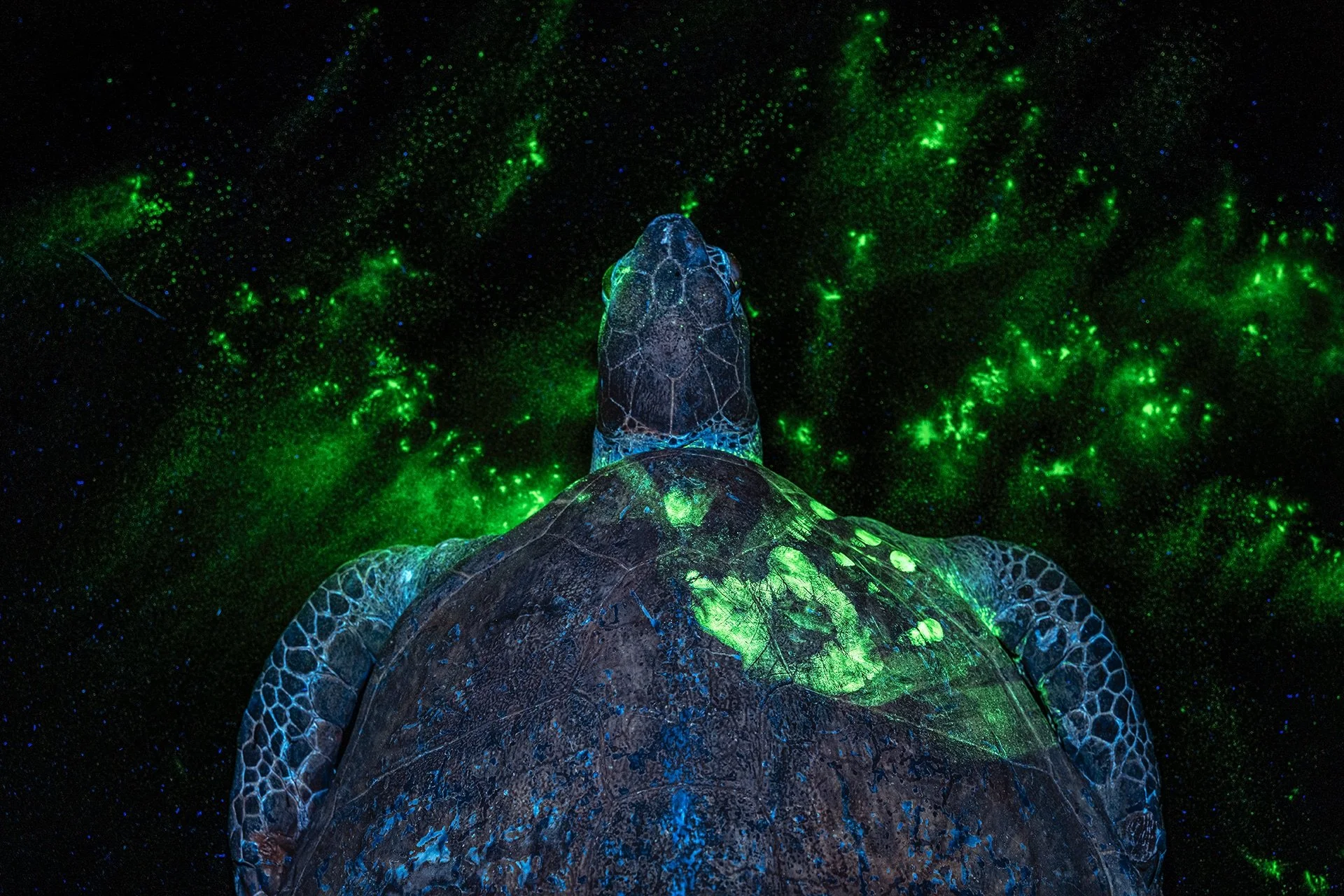
EVERY CRIME LEAVES A TRACE, 2025, Wildlife Crime Lab, Institute of Zoology (IOZ), London, UK
On the hunt for smugglers with wildlife forensics — the work that aims to disrupt or even dismantle illegally run wildlife trade chains.
On the first glance this may appear to be a underwater photograph of a floating green sea turtle (Chelonia mydas). But can you spot the human hand print? The image demonstrates a method for securing forensic evidence that can help to catch poachers and animal traffickers. Special fluorescent powder dyes, photographed under ultraviolet light, reveal hand and fingerprints, blood and other bodily fluids, gunpowder residue, and more. Wildlife forensic expert Dr. Alexandra Thomas and Louise Gibson from the Wildlife Crime and Forensics Unit, developing such methods to assist law enforcement. Six of the world's seven sea turtle species are classified as threatened, endangered, or critically endangered due to human persecution, habitat destruction, or marine pollution.
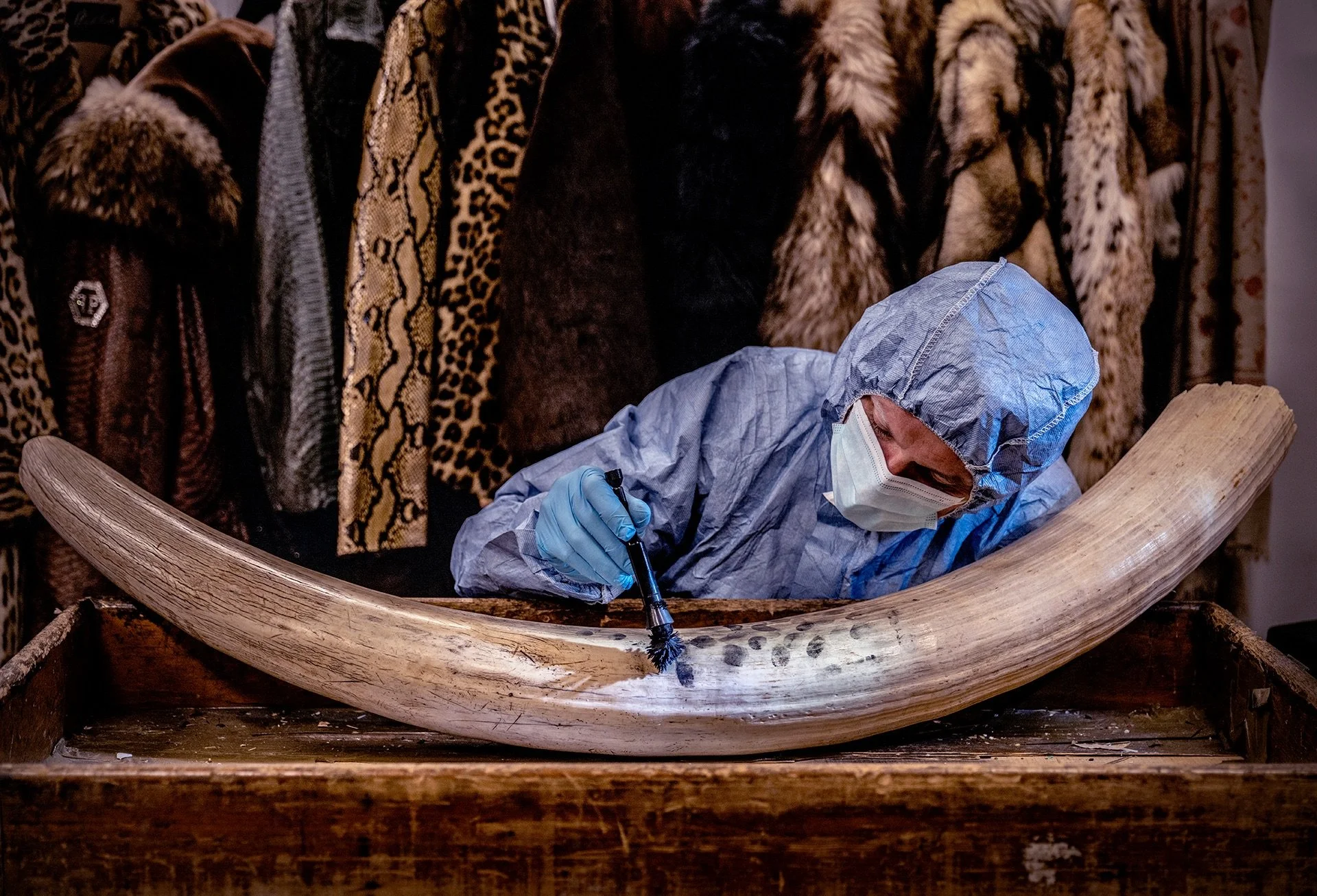
Forensic Finger Prints on Ivory, 2023, CITES Border Force, MET Police, Heathrow Airport, London, UK
Tracking the Invisible. The new frontier in wildlife forensics. Using a newly developed magnetic powder, Mark Moseley, a forensic investigator at London’s Metropolitan Police, dusts for and detects human fingerprints on an elephant tusk confiscated at Heathrow Airport.
Over 200 fingerprinting kits based on this technology were distributed to border forces across 40 countries in Africa and Asia. The results were immediate. In Kenya, evidence recovered using one kit led to 15 arrests, including five police officers, and the seizure of 11 elephant tusks. For the first time, ivory was not just proof of a crime; it was evidence of who committed it. A white variant of the powder is now being used to recover prints from rhino horn and pangolin scales. The powders are low-cost, field-deployable, and can be used in locations where DNA testing isn’t feasible.
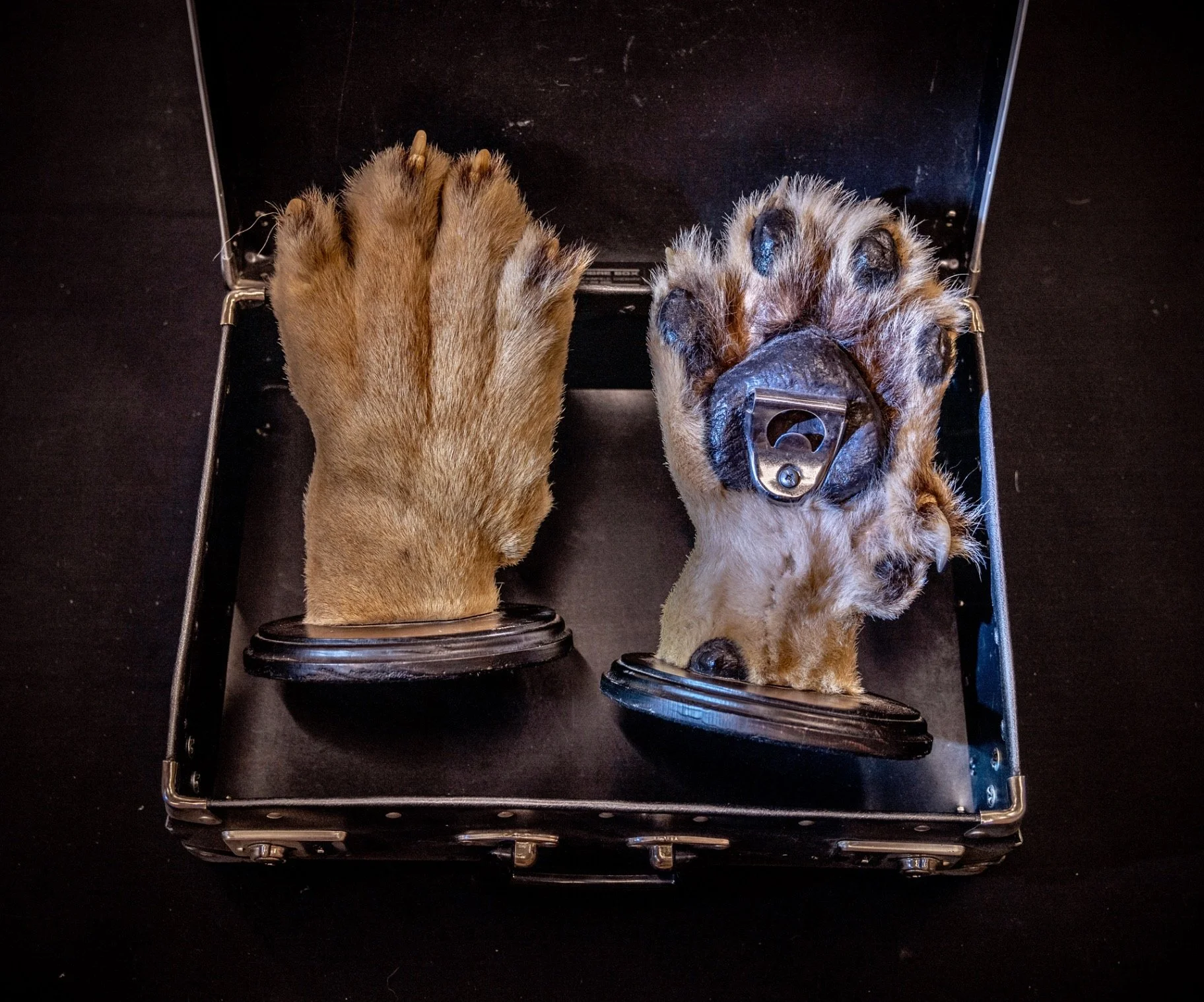
Real Lion Paws turned into Bottle Openers, 2023, CITES Border Force, Heathrow Airport, London, UK
The lion paws were turned into bottle openers for a trophy hunter.
The global annual operation, named Operation Thunder, involves police, customs, border control, environment, wildlife and forestry officials in 133 countries who work together across borders.
Over a period of only 3 weeks, customs and police officers coordinated some 500 arrests worldwide and more than 2,000 confiscations of animals and plants that are protected under the Convention on International Trade in Endangered Species of Wild Fauna and Flora (CITES) due to their threatened status. Any trade performed in breach of CITES is illegal. Border officers work tirelessly to establish intelligence about traded items with the help of forensic experts. Among the 2,114 seizures were more than 300kg of ivory, thousands of turtle eggs, 30 tons of plants, dozens of big cat body parts and rhino horns, as well as primates, birds and marine species.
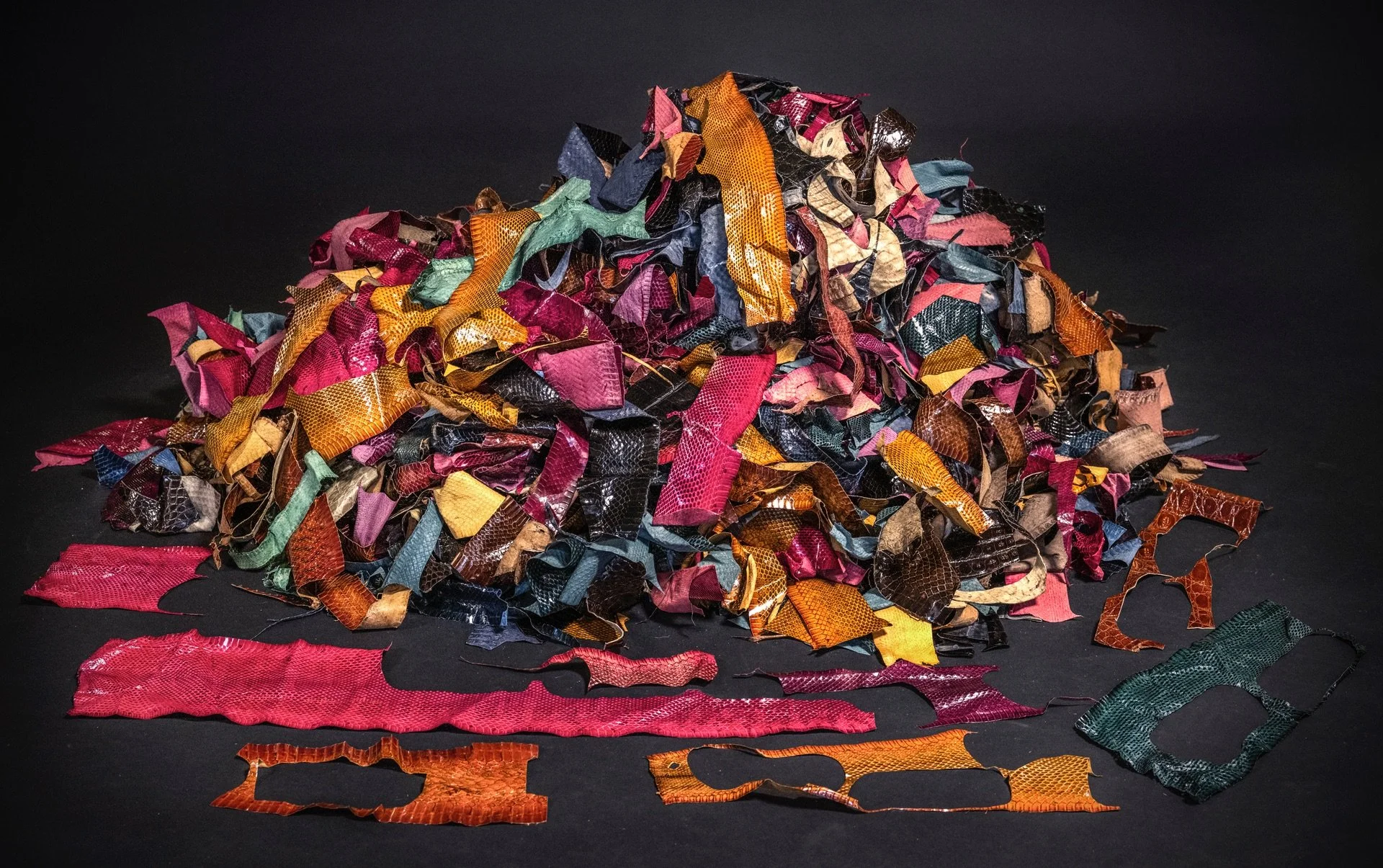
Reptiles Killed For Luxury Items, 2021, LIB Institute Hamburg, CITES Germany
In Hamburg, Germany, border agents discovered a shipment of 50 packages of reptile leather that didn’t have proper documentation, so they were held for DNA testing. The result? Roughly one-third were linked to CITES protected species.
The leather is used to produce cases for sunglasses and digital devices like phones and tablets. Animals and plants that are protected under the Convention on International Trade in Endangered Species of Wild Fauna and Flora (CITES) due to their threatened status.
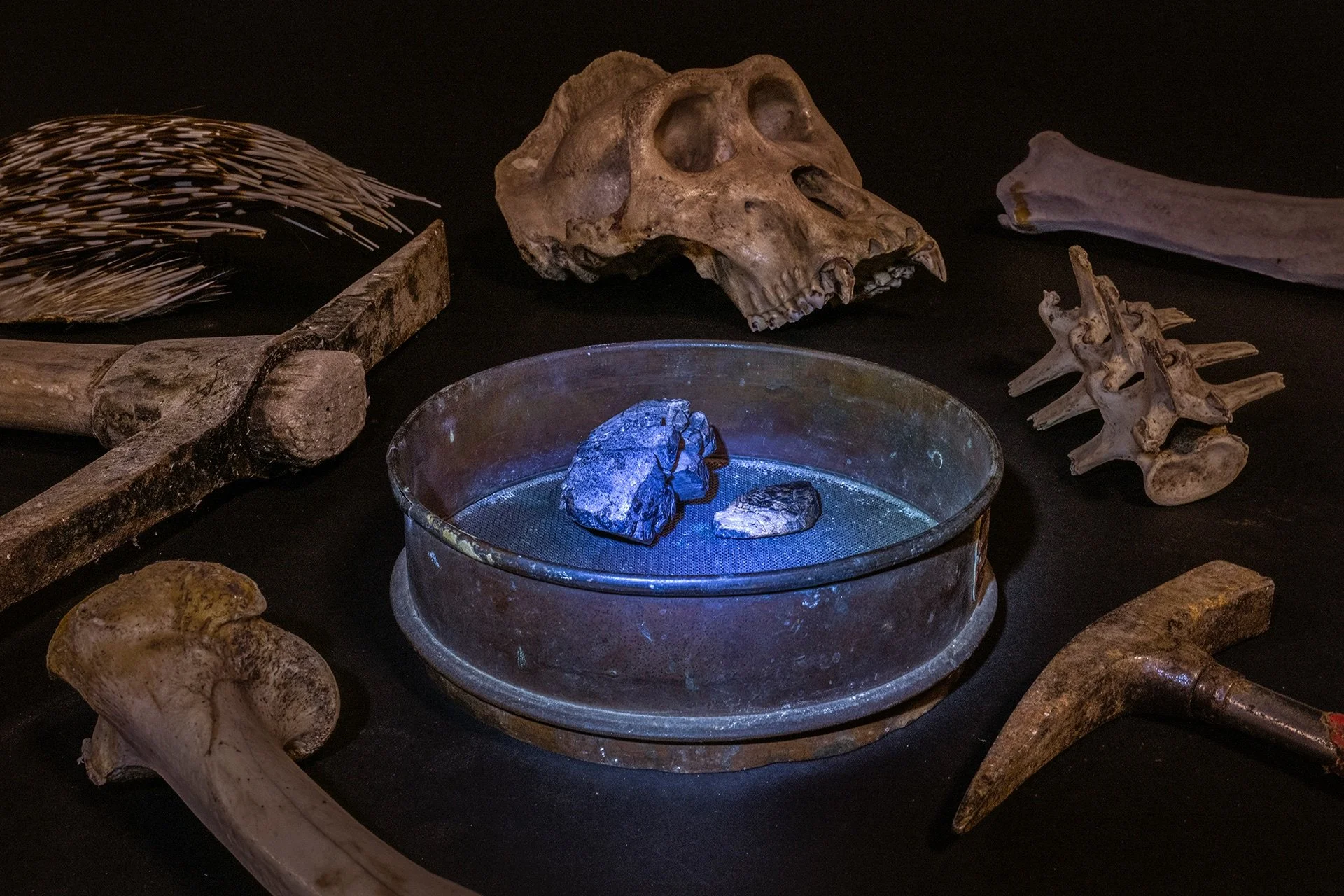
The Impact of Coltan Mining, 2021, The Leibniz Institute for the Analysis of Biodiversity Change (LIB), Hamburg, Germany, Europe
Glowing in blue torch light, coltan, a metallic ore is a component of phone and laptop batteries. Surrounded by mining tools & the remains of an animal mostly affected by the industry: a gorilla skull, vertebrae, leg bone. Coltan is extracted from the riverbeds of the Democratic Republic of the Congo by poorly paid miners who hunt wild animals for food. This threatens the future of the country’s gorillas and has led to an increased risk of viruses jumping to humans. Scientists believe that the consumption of nonhuman primates is most likely to be the source of the HIV, the Ebola virus and Mpox (monkeypox). Beyond this tragic development, entire gorilla families & communities are wiped out to steal young gorillas to serve as pets for the exotic pet trade. Mining goes hand-in-hand with habitat destruction and the displacement of wild animals. Reduce electronic waste - buy old, not new.